Portable Forensic Technology Is Moving More Testing to the Crime Scene
Forensic science has traditionally relied on laboratory testing. Evidence is collected at the scene, packaged, transported and then analysed by trained specialists using laboratory instruments.
That process is still essential, especially for confirmatory testing.
But forensic technology is changing. More tools are now being designed for use in the field, helping investigators make faster and better-informed decisions at the scene.
A 2026 article from Spectroscopy Online highlights this shift, noting that forensic science is expanding into on site analysis through portable instruments such as handheld Raman analysers and portable LIBS sensors. These tools can support rapid, non-destructive evidence screening at the scene, while helping reduce pressure on laboratory workflows.
Why portable testing matters
At a crime scene, time matters.
Investigators may need to quickly assess whether a substance is dangerous, whether an item needs specialist handling, or whether evidence should be prioritised for further testing.
Portable forensic technology can support this early decision making.
For example, handheld Raman technology can help identify unknown substances without the need for immediate laboratory analysis. This can be useful when dealing with suspected narcotics, explosives, hazardous materials, chemicals or unknown powders.
Portable tools do not replace the laboratory. Instead, they help teams make safer and more informed decisions before evidence is sent for confirmatory testing.
Supporting safer field decisions
One of the biggest benefits of portable forensic technology is safety.
First responders, forensic teams and border security officers may come across unknown materials during search warrants, inspections, emergency response work or crime scene examinations.
Being able to screen a substance quickly can help teams decide how to handle it, whether specialist support is required and how to reduce unnecessary exposure risk.
This is especially important when teams are dealing with high risk substances or unknown materials.
CloudMinds Raman Spectrometer
RollsTech Global offers the CloudMinds Raman Spectrometer, a portable Raman solution designed to support rapid identification and verification.
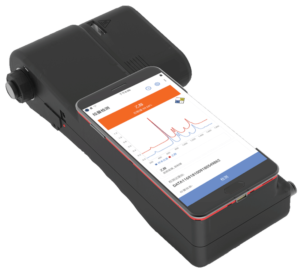
The device is described as a cloud AI spectrometer and is suited to applications including drug identification, explosives detection, dangerous items detection, food safety analysis, unknown solid, powder and liquid analysis, medicine analysis and jewellery identification.
For investigation teams, this kind of technology can support faster screening in the field while helping protect evidence for further testing if required.
It gives teams useful information earlier in the process, without removing the need for proper evidence handling, documentation and laboratory confirmation.
Faster results, better workflow
Laboratory testing can take time, especially when there is a large volume of evidence waiting for analysis.
Portable screening can help teams identify which items need urgent attention and which items may require further review.
This can support better workflow across the full investigation process, from the scene through to the laboratory.
The goal is not to make a final forensic conclusion in the field. The goal is to gain useful early information, improve safety and support better evidence decisions.
Why documentation still matters
Even with portable technology, documentation remains essential.
Any field based result should be clearly recorded, including what was tested, how it was tested, who completed the screening and what the result indicated.
This helps maintain evidence integrity and supports a clear chain of custody.
Portable forensic tools are most effective when they are used as part of a proper investigation workflow, supported by training, documentation and confirmatory testing where required.
The future of forensic investigation is more mobile
Forensic work is becoming more mobile and more connected to the scene.
As portable Raman, FTIR, LIBS and other field based technologies continue to improve, investigation teams will have more ways to assess evidence earlier in the process.
For law enforcement, forensic laboratories, border security, defence and government agencies, this shift can help improve safety, response times and decision making.
The laboratory will always remain critical.
But the first layer of forensic insight is increasingly moving closer to the scene.
Supporting modern forensic workflows
RollsTech Global works with forensic, law enforcement and government teams across Australia and New Zealand, providing advanced forensic technology, evidence management solutions and specialist investigation support.
Our range includes portable solutions such as the Cloudminds Raman Spectrometer, helping teams carry out faster field-based substance identification when time and safety matter most.
Contact our team to learn more about portable forensic technology, evidence handling products and investigation workflow solutions.
Reference: Spectroscopy Online, Back to Basics: Analyzing the State of Forensic Science in 2026.