Finding Evidence Beyond Human Vision
For decades, forensic investigations have been limited by what investigators could physically see. Torchlight. Photography. Powders. Chemicals. If evidence didn’t show up under those conditions, it often went unnoticed or was discovered too late.
Today, that limitation matters more than ever. Crime scenes are more complex, more scrutinised, and more time-critical. Accuracy and documentation standards are rising, and there’s less tolerance for missed evidence. The problem isn’t a lack of forensic science—it’s the limits of human vision.
When Evidence Doesn’t Look Like Evidence
Blood diluted with water. Body fluids absorbed into fabric or flooring. Fibres hidden in visually noisy environments. Gunshot residue scattered across surfaces.
Under standard lighting, these traces are easy to miss. Investigators must make early decisions about where to focus, knowing that each choice leaves blind spots elsewhere.
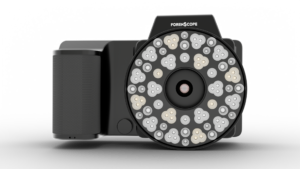
This is where ForenScope SuperSpectral imaging changes everything. By capturing ultraviolet, visible, and infrared wavelengths, it reveals traces invisible to the naked eye. Blood, body fluids, fibres, hair, bone, latent fingerprints, and residue can be detected without powders, chemicals, or physical contact.
A Different First Step at the Scene
The first examination of a crime scene is often the most critical. Once surfaces are touched, treated, or disturbed, context can disappear.
SuperSpectral imaging allows investigators to scan a scene non-invasively before any invasive techniques are applied. Multi-band illumination and automated optimisation adapt quickly to different surfaces and lighting conditions. Instead of working from assumptions, investigators let the scene reveal what is truly there.
Fewer Interventions, Stronger Records
Every additional process applied to a scene adds risk. Contamination, degradation, and loss of detail are common with repeated handling.
Early, contact-free detection reduces the need for chemical enhancement or multiple examinations. High-resolution SuperSpectral images preserve how traces appeared under specific wavelengths. This strengthens the evidentiary record and reduces reliance on later interpretation.
A Quiet Evolution in Forensic Practice
SuperSpectral imaging is no longer experimental. It’s a practical solution to the growing gap between what investigators are expected to find and what traditional tools allow them to see.
Because the most damaging evidence isn’t the evidence that’s challenged. It’s the evidence that was never found.
View ForenScope products or Contact us to learn more about Forenscope SuperSpectral